Geological exploration, engineering geology and construction expertise services
Our Works
Expert inspection of The K. Satpayev Canal, Kazakhstan
Determination of the technical condition of the main building structures of the emergency reconstructed section of dam No. 87 of hydraulic structure No. 4
Water Supply Ditch, Almaty Region, Kazakhstan
Detection and localization of leaks and water filtration points from earthen canal in Almaty region near the village of Teskensu
LNKh-2 Canal in Shu, Kazakhstan
Detection and localization of water leaks from the LNKh-2 canal in Shu, near Tole Bi village
BCK Canal in Merke, Kazakhstan
Detection and localization of water leaks from the BCK canal in Merke
Botbay-Siykhym Canal in Kulan, Kazakhstan
Detection and localization of water leaks from the Botbay-Siykhym canal in Kulan
Technology
GVIER (Deep High-Resolution Impulse Electrical Exploration) is a contactless pulsed electrical exploration technology based on ground-penetrating radar modifications, using ultra-wideband electromagnetic signal in the 1-1000 MHz range and resistively loaded dipole antennas for subsurface probing. Depending on the tasks and required depth, antennas of various lengths are used.
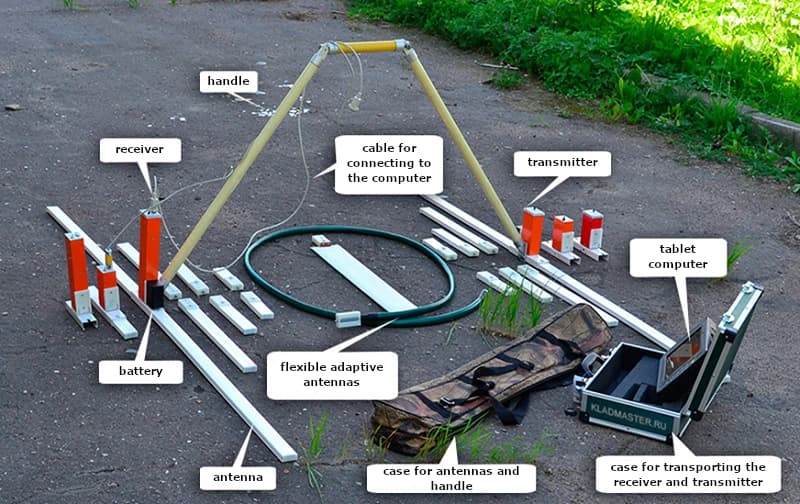
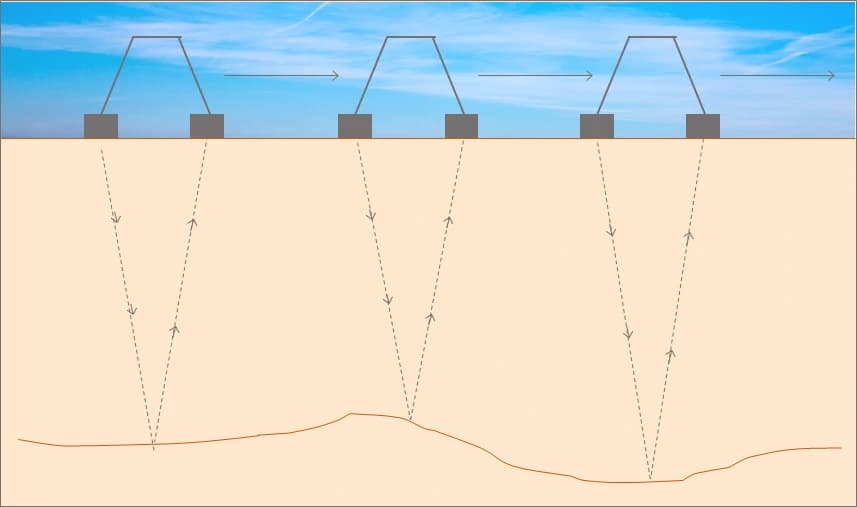
The technology is based on the physical phenomenon of electromagnetic wave reflection from subsurface boundaries of media with different geoelectric parameters. Information about the structure of the probed geological space is obtained from the following data: the time interval between the electromagnetic pulse generation by the transmitter and the registration of its reflections from subsurface media boundaries by the receiving device, as well as the amplitude, shape and polarity of the reflected signal. These parameters closely correlate with the physical properties of geological structures: density, porosity, moisture and others. Surveys are conducted along profiles by continuous profiling or with a specified step between points from 10 cm. GPS devices are used to position the surveyed profiles on the ground.
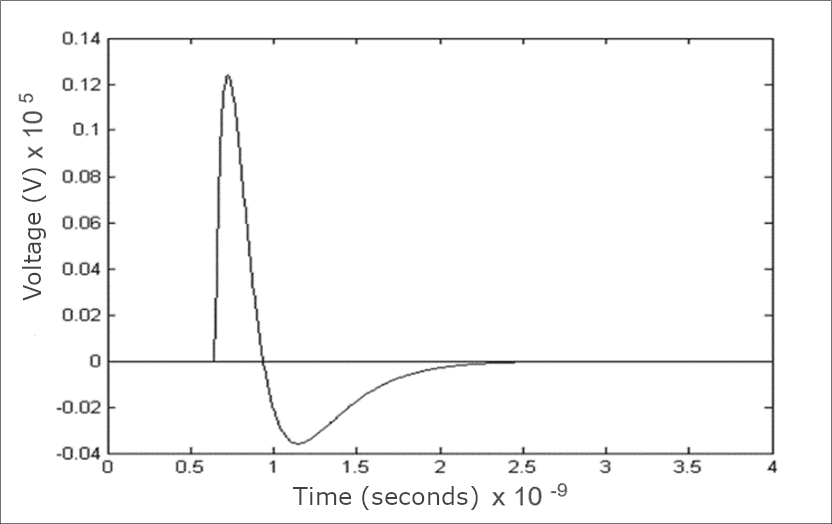
The signal source generator has the ability to adjust power for research at various depths and generates a nanosecond pulse (unipolar pulse without high-frequency filling) with a steep leading edge. The steep leading edge of the pulse and its large amplitude determine the high resolution of the technology, high penetration depth and the ability to work in low-resistivity media - water-saturated soils, clays and loams.
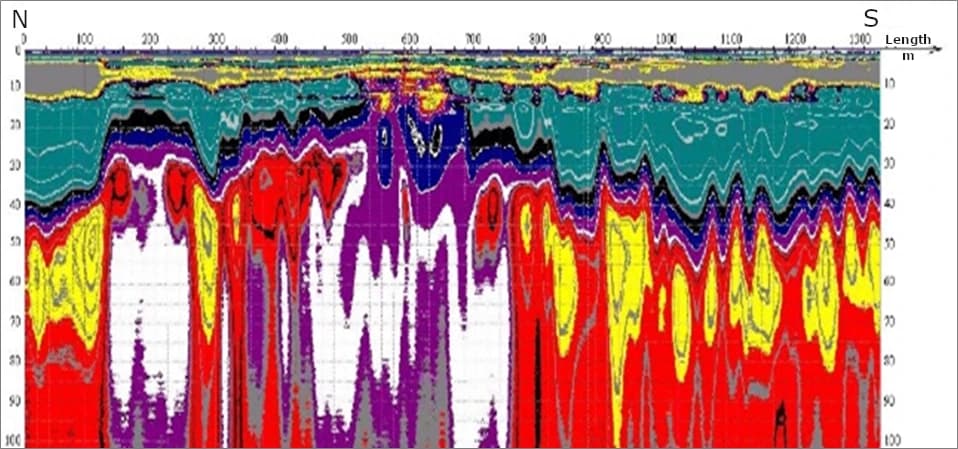
The result of the research is a geoelectric section (radarogram), converted to a depth scale. The conversion is carried out based on field calibration results and correlation to existing geological boreholes and archival engineering-geological survey data. The results of pulse electrical exploration can be compared with seismic and classical electrical exploration results.
Innovative development that significantly increases the speed of field work in large and hard-to-reach areas.
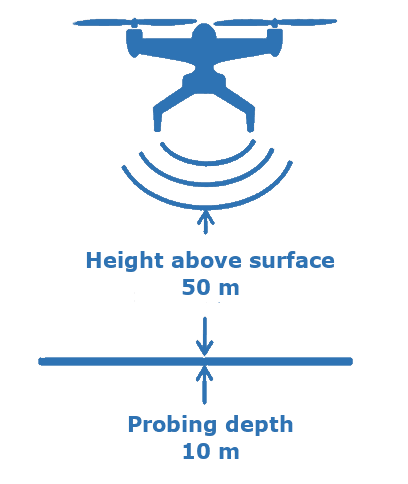
GVIER Advantages

Probing depth: 0.1 m – 400 m

Reliable and detailed

Formation of object's "digital footprint"

Non-destructive ecological method

Media separation (thawed\frozen; dry\wet; hydrocarbons\water, etc.)

Possibility of client staff training
Disadvantages and Limitations of Existing Alternatives
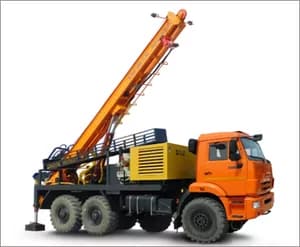
Direct methods (boreholes, pits)
- High cost
- Complex mobilization
- Lack of data on areas between boreholes
- Long research duration
- Methods that disturb geological space
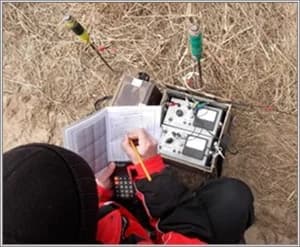
Classical electrical exploration
- High labor intensity and time
- Lack of data on areas between boreholes
- Complex mobilization
- High error due to a priori medium model: up to 50%
- Contact methods
- Work only during field season
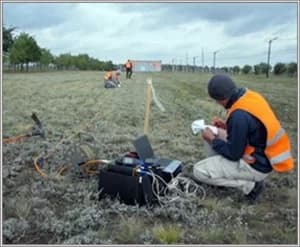
Shallow seismic exploration
- Long research periods
- Complex mobilization
- High labor intensity and cost
- In waterlogged soils, lack of information about the upper boundaries of the section
- Does not separate media boundaries: thawed/frozen; Hydrocarbons/water; wet/dry.
- Contact methods
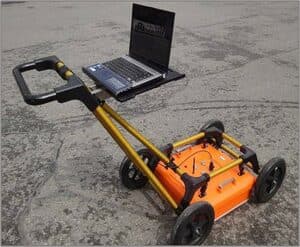
Classical ground-penetrating radars
- Shallow probing depth
- Low informativeness
- Rapid signal attenuation in waterlogged loams
- Low signal power
Applications

GVIER IN GEOLOGICAL EXPLORATION
...................
Identification of mineral exploration indicators and exclusion of unpromising areas
...................
Optimization of exploration grid and verification drilling location
Localization and contouring of deposits, including deep-seated ones:
- ore gold
- sulfide-magnetite ores
- manganese and gold mineralization in weathering crusts
- uranium-bearing metasomatites
- copper-zinc-pyrite ore bodies
- pyrite-polymetallic ore bodies
- rare earths and vanadium in weathering crusts
- contouring of kimberlite pipes
- detection of crystal-bearing quartz veins
- coal deposit exploration
............
Identification of geomorphological structures favorable for the formation of gold placers, including buried paleostructures
............
Localization of aquifers, water-conducting man-made fractures and cavities, natural rock fracturing that may lead to mine flooding
GVIER IN ENGINEERING GEOLOGY
...................
Identification of soil boundaries and anomalies
...................
Determination of utility locations
...................
Construction control of hidden works
Localization of underground cavities, karsts, fractures, zones of decompaction and other anomalies in the geological mass
............
Inspection and monitoring:
- condition of soil foundations under building and structure foundations
- condition of road surfaces, railway embankments, runways
- permafrost degradation, position of frozen rock roofs
- groundwater levels, aquifers
- zones of hidden leaks of aggressive products, contamination zones
- foundations and anomalies of solid waste landfills and industrial waste
- earthen dams, dikes and tailings
............
Mapping of engineering utilities
............
Determination of actual depths of foundations, piles, drainage systems, bridge supports, pipelines (including underwater location)
Work Execution Roadmap
Stage 1
- Customer task setting
- Technical and commercial proposal
- Preliminary estimate
- Pricing justification
Stage 2
- Confidentiality agreement
- Exchange of historical geological data on the object (if available)
- Contract + terms of reference + estimate
Stage 3
- Field work
- Office data processing
- Scientific and technical report
- Results presentation
Value Proposition
Risk Reduction
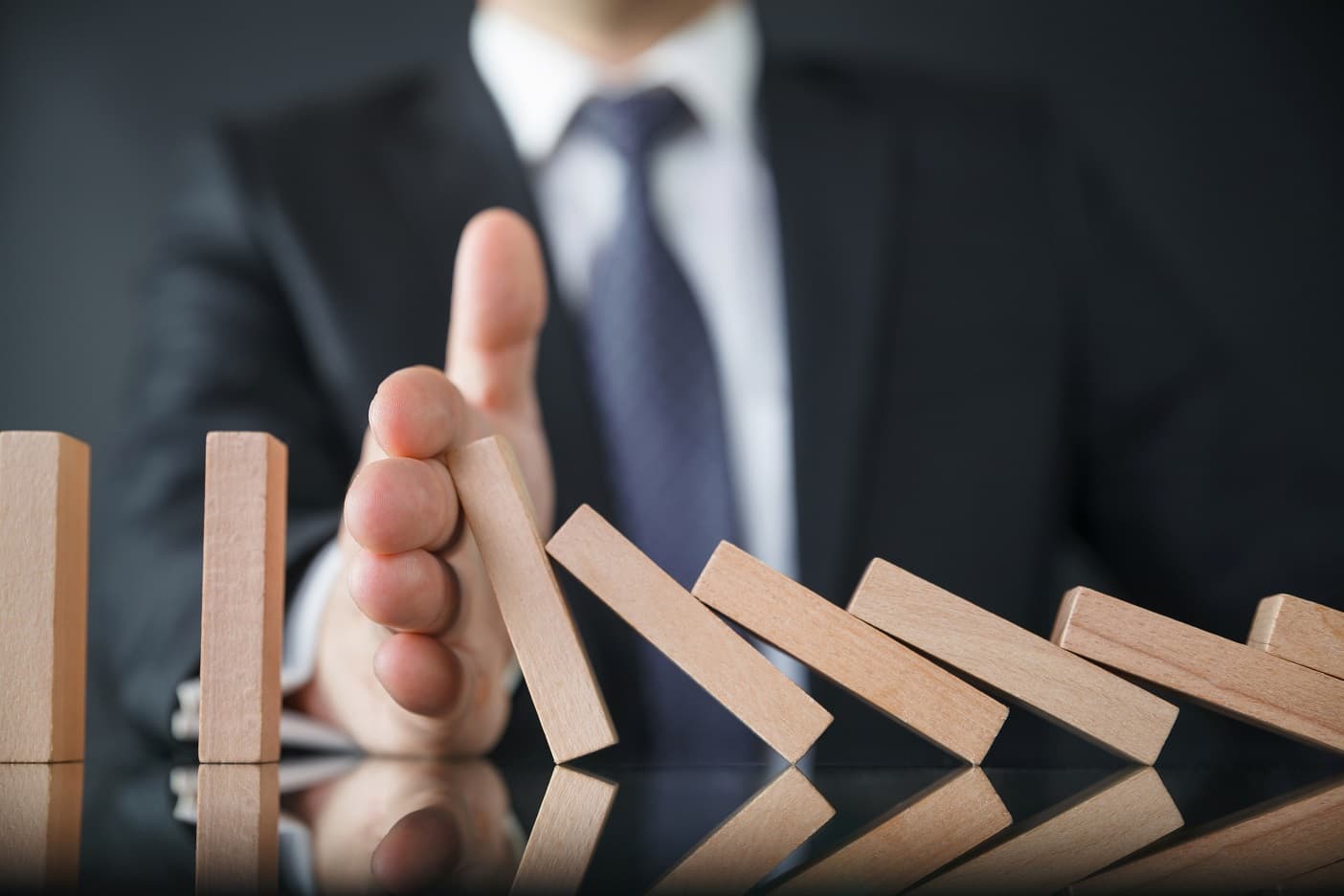
Additional data on hazardous anomalies
Ratio of research cost to potential damage
200 times
Cost Reduction
Reduction in the number of drilled boreholes
Optimization of borehole location and quantity
by 5 times
Reliability
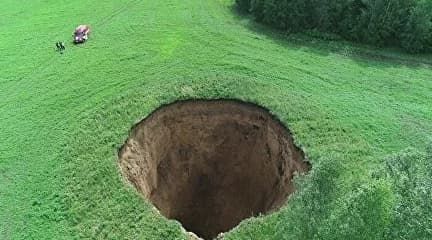
Reduced probability of missing geological anomalies
Detail level of continuous profiling
> 20 times

Contacts
Office: 127566, Almaty, Rozybakieva st. 37b
CEO of GeoExpertConsult LLP
Anton Petrovich Egorov
+7 (707) 793-00-06
Scientific and Technical Consultant
Forensic Construction Expert
Dmitry Sergeevich Gorkin
+7 (747) 622-36-15
E-mail: info@geoexpertconsult.ru